
LWSLaw With Shivanshi

THE WORKROOM

The work behind the argument.

UNOFFICIAL HANDBOOK

How legal arguments are researched, written, tested and rebuilt.

01 · THE ARGUMENT IN PRACTICE

Experience becomes useful when it returns to the work.

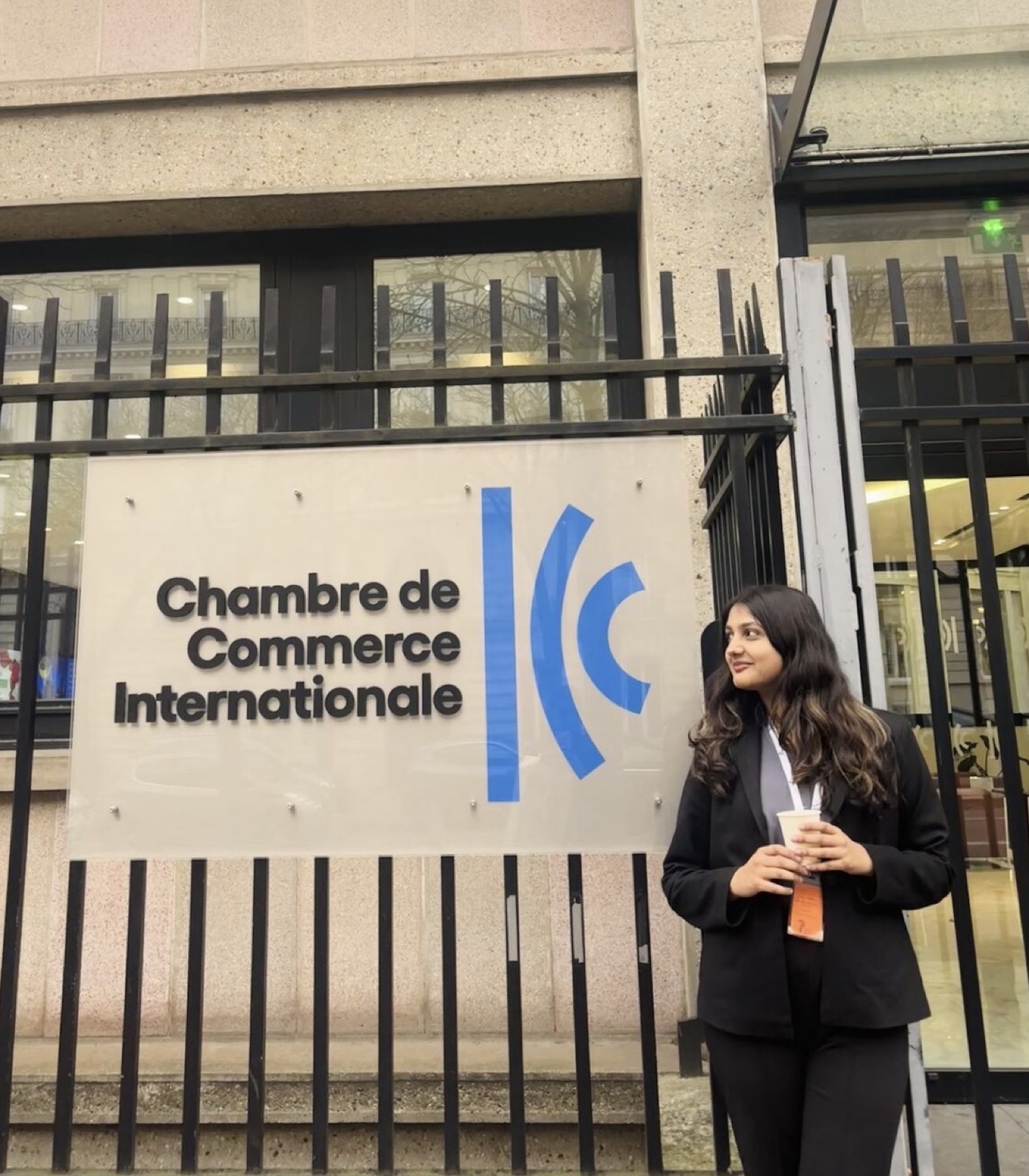
Shivanshi and a fellow participant at the ICC during the cross-moot experience
PARIS · CROSS-EXAMINATION

Paris: Cross-Examination, Arbitration and the Work Behind the Room

I was offered the opportunity around the end of my first year, before I had properly entered my second. The team included seniors whose work I already deeply respected, which made the invitation feel exciting and slightly unreal in equal measure.

The moot centred on international commercial arbitration and cross-examination, built around a proposition running into hundreds of pages. It demanded reading, rereading, redrafting and, at one point, the willingness to discard work we had spent days building.

Paris became a lesson in accepting an opportunity, then doing the sustained work required to grow into it.

Read the original LinkedIn post ↗

Shivanshi at the University of Sydney
SYDNEY · IMLAM

Sydney: Growing Into the Argument

The claimant’s case was not the side I instinctively liked when we began preparing for Sydney. Over months of research, drafting and oral practice, that changed completely.

The arguments that first felt distant became the ones I knew closely enough to defend. Preparing for IMLAM became an exercise in understanding that advocacy is not always about beginning with conviction.

Sometimes conviction is built through the slow work of learning a record well enough to see why an argument deserves to be made.

Read the original LinkedIn post ↗

02 · RESEARCHING THE PROBLEM

Start with the record, then build the research trail.

Read the problem before researching the law
  • Identify the parties and relief sought.
  • Separate agreed and disputed facts.
  • Mark dates, documents and procedural posture.
  • Notice which facts change the applicable rule.
Build an issue tree
  • Principal issue
  • Elements of the legal test
  • Disputed element
  • Factual question attached to each element
  • Authority required for each proposition
Use an authority hierarchy
  • Constitutional and statutory text
  • Binding judgments
  • Relevant persuasive judgments
  • Rules, regulations and official materials
  • Authoritative secondary literature
  • Commentary and explanatory material
Keep a research trail
  • Proposition and supporting authority
  • Pinpoint and relevant principle
  • Factual application and contrary authority
  • Status checked and date checked
Know when the research question has changed
  • Legal research is iterative. A new authority or a closer reading of the record may change the question itself; revise the issue tree rather than forcing the first formulation.

03 · BUILDING THE WRITTEN ARGUMENT

From issue to submission.

01

Identify the legal test

02

State the proposition

03

Support it with authority

04

Apply the material facts

05

Address the strongest contrary argument

06

State the requested conclusion

Law–fact–submission

A practical drafting method: explain the rule, connect it to the material facts and state the submission that follows. It is a useful discipline, not the only universally accepted form.

Memorial anatomy

Common components include a cover page, table of contents, index of authorities, statement of jurisdiction, statement of facts, issues raised, summary of arguments, arguments advanced and prayer.

The competition rules and proposition always control. A general template must be adapted to the applicable memorial rules.
Drafting and redrafting
  • Use headings that advance the submission.
  • Test proposition sentences and paragraph-level authority.
  • Apply facts and deal with adverse material.
  • Remove repetition and verify that each authority supports the exact proposition cited.
CITATION DESK

Use the system the work requires.

Follow the citation system required by the relevant institution, journal, competition or court.

OSCOLAOfficial Oxford resources ↗THE BLUEBOOKOfficial website ↗

04 · MAKING THE ORAL ARGUMENT

Structure that can survive a question.

Opening and roadmap

Prepare this as part of a flexible submission and adapt it to the record, the forum and any competition-specific rules. Advocacy preferences are not universal rules.

Issue prioritisation

Prepare this as part of a flexible submission and adapt it to the record, the forum and any competition-specific rules. Advocacy preferences are not universal rules.

Time allocation

Prepare this as part of a flexible submission and adapt it to the record, the forum and any competition-specific rules. Advocacy preferences are not universal rules.

Answering questions directly

Prepare this as part of a flexible submission and adapt it to the record, the forum and any competition-specific rules. Advocacy preferences are not universal rules.

Using the record

Prepare this as part of a flexible submission and adapt it to the record, the forum and any competition-specific rules. Advocacy preferences are not universal rules.

Making careful concessions

Prepare this as part of a flexible submission and adapt it to the record, the forum and any competition-specific rules. Advocacy preferences are not universal rules.

Returning after an intervention

Prepare this as part of a flexible submission and adapt it to the record, the forum and any competition-specific rules. Advocacy preferences are not universal rules.

Distinguishing a difficult authority

Prepare this as part of a flexible submission and adapt it to the record, the forum and any competition-specific rules. Advocacy preferences are not universal rules.

Closing with the relief requested

Prepare this as part of a flexible submission and adapt it to the record, the forum and any competition-specific rules. Advocacy preferences are not universal rules.

Cross-examination preparation where relevant

Prepare this as part of a flexible submission and adapt it to the record, the forum and any competition-specific rules. Advocacy preferences are not universal rules.

05 · THE WORKING TOOLKIT

Files made to be used.

01

Proposition-reading sheet

Resource in preparation

02

Issue tree

Resource in preparation

03

Research trail

Resource in preparation

04

Authorities table

Resource in preparation

05

Memorial structure checklist

Resource in preparation

06

Argument-editing checklist

Resource in preparation

07

Oral-submission outline

Resource in preparation

08

Question log

Resource in preparation

09

Feedback and redrafting sheet

Resource in preparation

10

Citation resources

Resource in preparation